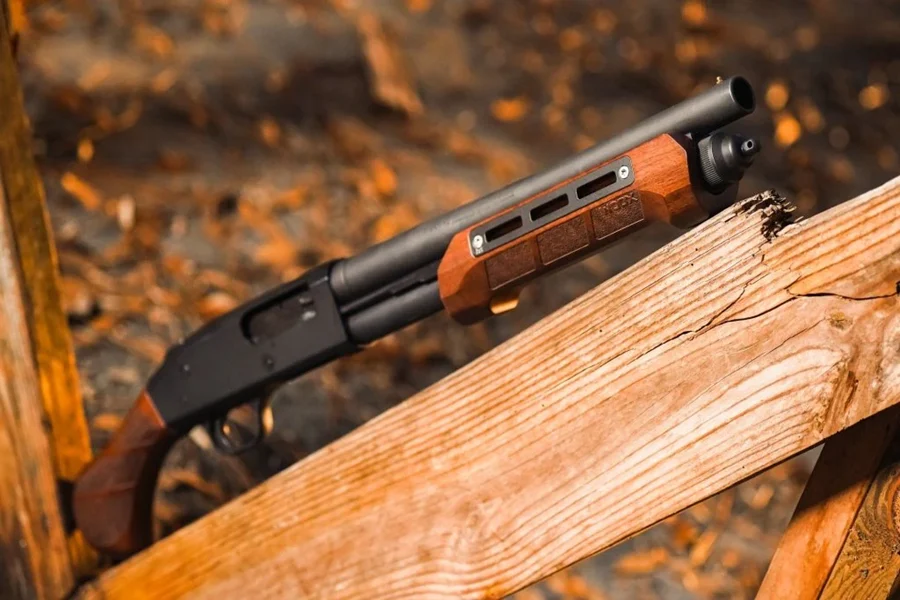
Pump-Action Shotgun Comparison Chart
When selecting the ideal pump-action shotgun for home defense or hunting, it can be helpful to compare key features across popular models. Below is a detailed comparison chart outlining vital specifications, features, and benefits for some of the top pump-action shotguns on the market. This chart will help you evaluate which firearm best fits your unique needs.
| Shotgun Model | Gauge | Barrel Length | Magazine Capacity | Weight (lbs) | Best Use | Price Range ($) |
| Mossberg 500 | 12 or 20 | 18.5″ – 28″ | Up to 8+1 | ~6.75 | Versatile (Defense & Hunting) | $400-$550 |
| Remington 870 Express | 12 or 20 | 18.5″ – 28″ | Up to 7+1 | ~7 | Home Defense & Hunting | $350-$600 |
| Winchester SXP Defender | 12 | 18″ | 5+1 | ~6.25 | Home Defense | $350-$450 |
| Benelli Nova | 12 or 20 | Up to 28″ | Up to 4+1 | ~7.2 | Waterfowl Hunting | $450-$550 |
| Stoeger P3000 | 12 | Up to 28″ | Up to 4+1 | ~6.9 | Budget-Friendly All-Purpose | $300-$400 |
Factors Considered in the Chart
Each shotgun was evaluated based on its gauge, barrel length, magazine capacity, weight, and suitability for specific purposes like home defense or hunting.
- Gauge: Determines power and recoil; most models are available in both common gauges (12 and sometimes lighter-recoiling options like a 20-gauge).
- Barrel Length: Shorter barrels (e.g., under ~20”) are ideal for maneuverability during home defense scenarios, while longer barrels (~26”-28”) are better suited for accurate hunting use at range.
- Magazine Capacity: Helps ensure you have enough rounds without frequent reloading. Higher capacities are typically favored in defensive situations.
- Weight: Affects portability during hunts and handling ease in high-pressure scenarios.
- Price Range: Balanced for functionality vs cost-efficiency; higher-priced models may include advanced features such as corrosion resistance or ergonomic designs.
Key Observations from the Comparison
- The Mossberg Model series is excellent for versatility—it’s highly customizable and works well across different applications.
- The Remington Model offers tried-and-tested reliability and is often favored by first-time shotgun owners due to its ease of operation.
- For those on a tighter budget, the Stoeger P3000 provides great functionality at an accessible price point without sacrificing performance quality.
- The Benelli Nova stands out as an excellent choice for longer-range waterfowl hunting with its smooth cycling mechanism and durable polymer construction.
This comparison highlights that there’s no universal “best” pump-action shotgun—your choice depends heavily on your primary intended use case, whether that’s defending your home or venturing into the field for game hunting purposes.
How We Tested the Best Pump-Action Shotguns
Evaluating pump-action shotguns requires a methodical and hands-on approach to ensure reliable, practical, and accurate assessments. Here’s an overview of how we tested the best pump-action shotguns for both home defense and hunting needs.
Testing Criteria
To provide comprehensive results, we focused on several key factors that are important for shotgun performance:
– Build Quality: Materials, durability, and overall craftsmanship of the shotgun.
– Reliability: Consistent cycling of shells without malfunctions or jams.
– Ease of Use: Ergonomics, weight balance, and intuitive features for handling under stress or in outdoor environments.
– Accuracy: How well the shotgun performs across different ranges during both hunting and defensive scenarios.
– Recoil Management: Comfort during extended use with various loads.
– Versatility: Adaptability in terms of choke systems, barrel length options, and ability to handle diverse ammunition types (e.g., birdshot, buckshot, slugs).
– Price-to-Performance Ratio: Value offered by each shotgun relative to its cost.
Testing Environments
We conducted our tests in two distinct environments to simulate realistic use cases:
1. Home Defense Scenario Testing: A controlled indoor range was set up to replicate close-quarter engagement distances (5–20 yards). We assessed maneuverability in tight spaces, ease of reloading under pressure, and quick sight alignment in low-light conditions using various shell types like buckshot and slugs.
- Hunting Field Testing: For hunting evaluation, we tested shotguns in open fields and wooded terrains at distances ranging from 10–40 yards for small game (e.g., rabbits) as well as longer ranges up to 70 yards for larger game (e.g., deer). The focus was on accuracy with birdshot for upland birds and slug performance for bigger targets.
Hands-On Evaluation Process
- Shotgun Setup: Each model was configured with commonly used accessories like optics or aftermarket chokes when applicable.
- Live-Fire Exercises: A variety of ammunition brands were cycled through each firearm to evaluate compatibility and performance consistency.
- Field Maneuverability Tests: Practical drills included transitioning from a ready position to a firing stance quickly while aiming accurately.
- Stress Testing: Each model underwent high-volume shooting sessions — over 250 rounds per shotgun — to assess heat management and long-term reliability.
Results at a Glance
| Shotgun Model | Reliability | Recoil Control | Versatility | Price | Best For |
| Remington 870 | Excellent | Moderate | High | $$ | Home defense & hunting |
| Mossberg 590 | Excellent | Good | Moderate | $$$ | Tactical applications |
| Winchester SXP | Good | Excellent | Moderate | $$ | Beginners & hunters |
| Benelli Nova | Good | Excellent | High | $$$$ | All-around performance |
Key Observations
- Models like the Mossberg 590 excelled in home defense scenarios thanks to their robust build quality and tactical features such as heat shields and ghost ring sights.
- For small-game hunters requiring precision at longer distances, the Winchester SXP stood out due to its smooth action cycling paired with excellent recoil control.
- The Remington 870 remains an industry favorite due to its versatility across both self-defense applications and hunting settings.
By following this rigorous testing process alongside real-world assessments, readers can trust that the models recommended meet high standards tailored for specific needs such as personal security or outdoor pursuits.
How We Tested the Best Pump-Action Shotguns
When evaluating pump-action shotguns for home defense and hunting, we followed a rigorous testing process to ensure that the recommendations were not only objective but also applicable to real-world use. Below is an overview of the methodology used to test these shotguns, including the key factors we considered.
Criteria for Evaluation
- Tested under various conditions, including extreme weather (rain, mud, and temperature fluctuations).
- Evaluated for smooth cycling of the action and consistent shell ejection.
- Assessed stock design, grip texture, and ease of handling under stress.
- Checked the placement of safety mechanisms and controls to ensure intuitive operation.
- Analyzed how well each shotgun mitigates recoil with different loads (birdshot, buckshot, slugs).
- Took note of features like recoil pads or gas systems that improved comfort during extended shooting sessions.
- Evaluated capacity options for home defense scenarios and hunting trips. This included both standard magazine tubes and aftermarket extensions.
- Tested adaptability for both home defense and hunting by examining barrel length options, choke systems, and accessory compatibility (e.g., optics rails or sling mounts).
- Compared pricing with performance to identify models offering the best balance of quality features at a reasonable price point.
Testing Process
- Live-Fire Testing Each shotgun was tested at a controlled range using a variety of ammunition types:
- Birdshot: To evaluate pattern consistency at various distances.
- Buckshot: To simulate home-defense encounters.
- Slugs: To measure accuracy over longer distances when hunting larger game.
Testers included shooters with varying levels of experience—from beginners to seasoned professionals—to gauge usability across skill levels.
- Stress Tests To examine how well each firearm performs under stressful or demanding conditions:
- Shotguns were subjected to rapid-fire cycling.
- Dirt and debris were intentionally introduced into key mechanisms (e.g., action bars) to assess reliability under adverse conditions.
- Fit & Comfort Multiple testers evaluated how comfortably each firearm fit their build:
- Adjustable stock lengths or comb heights received higher ratings for accommodating diverse users.
- Shotguns with lightweight designs received extra consideration for ease of carrying during long hunts.
- Practical Scenarios Specific scenarios were simulated:
- Home Defense: Close-range targets engaged in low-light settings using buckshot loads.
- Hunting: Long-distance accuracy tested on stationary targets representing small game (e.g., birds) or larger animals (e.g., deer).
Results Documentation
| Shotgun Model | Reliability | Recoil Management | Ergonomics | Versatility | Rating |
| Remington 870 | Excellent | Good | Great | High | 9/10 |
| Mossberg 500 | Excellent | Very Good | Great | High | 9/10 |
| Winchester SXP | Very Good | Excellent | Good | Moderate | 8/10 |
By employing this structured approach to testing pump-action shotguns, we aimed to provide readers with actionable insights into which options stand out in terms of quality and performance across multiple use cases—whether protecting your home or heading out on a hunt.
Downsides of Pump-Action Shotguns
While pump-action shotguns are widely regarded for their reliability and versatility, they are not without drawbacks. Understanding these downsides is crucial when deciding whether a pump-action shotgun is the right choice for your needs, whether it’s home defense or hunting. Below, we explore the key disadvantages associated with pump-action shotguns.
1. Learning Curve for Beginners
- Manual Operation: Pump-action shotguns require users to manually cycle the action after each shot to chamber a new round. This can be challenging for beginners who may lack familiarity with firearm mechanics.
- Coordination Required: Proper operation involves a coordinated effort between pulling the trigger and cycling the pump, which can feel cumbersome for inexperienced shooters.
- Room for Errors: In high-pressure situations like home defense, there’s a higher chance of short-stroking (failing to fully rack the slide), which may result in jams or failure to load a new round.
2. Slower Rate of Fire Compared to Semi-Automatics
- Pump-action shotguns inherently have a slower firing rate than semi-automatic models due to their manual cycling mechanism.
- During hunting or defensive scenarios where multiple targets may need engagement quickly, this slower pace could be a disadvantage.
| Type | Firing Speed | Mechanism |
| Pump-Action | Moderate | Manual slide action required |
| Semi-Automatic | Faster | Automatically cycles rounds |
3. Heavier Recoil
Pump-action shotguns often have more pronounced recoil as they lack mechanisms like gas or inertia systems that help mitigate the kickback in semi-auto models. This can lead to: – Reduced Accuracy: Increased recoil makes follow-up shots harder to control. – Shoulder Fatigue: Extended shooting sessions during hunting could lead to physical discomfort.
4. Noise During Operation
The distinctive “clack-clack” sound of racking the slide on a pump shotgun is iconic but not always desirable: – While this sound can serve as an intimidation factor in home defense scenarios, it also eliminates any element of surprise by alerting intruders to your presence. – For hunters, operating the slide may spook prey if not done carefully.
5. Weight and Size Considerations
Pump-action shotguns are often bulkier compared to other firearm types: – Heavier weight can make them less suitable for prolonged carry during hunting excursions. – Larger frame size may be harder to handle in tight spaces like hallways during home defense.
Summary Table: Common Downsides of Pump-Actions
| Downside | Impact |
| Manual operation | Steeper learning curve; prone to user error |
| Slower rate of fire | Reduced speed compared to semi-autos |
| Heavier recoil | Difficulty controlling follow-up shots |
| Noise during operation | Alerts intruders/prey; limits stealth |
| Weight and size | Less maneuverable; physically demanding |
Understanding these limitations helps set realistic expectations about what pump-action shotguns offer—and where they might fall short—allowing you to make an informed decision on whether they align with your specific requirements for hunting or home defense.
Downsides of Pump-Action Shotguns
While pump-action shotguns are celebrated for their reliability, versatility, and robust design, they do have certain drawbacks that potential buyers should evaluate. These downsides generally depend on the intended use, experience level of the shooter, and specific preferences. Below is a detailed look at some of the most notable limitations of pump-action shotguns.
1. Slower Rate of Fire
Compared to semi-automatic or fully automatic firearms: – Pump-action shotguns require the user to manually cycle the action between shots.
– This manual cycling can slow down follow-up shots, especially in high-pressure situations like home defense or competitive shooting. – Beginners may find it challenging to maintain speed while staying accurate under stressful conditions.
While practice can improve speed and efficiency, users seeking rapid-fire capability may find this design less ideal.
2. Higher Learning Curve for Beginners
Pump-action shotguns demand a higher level of coordination compared to break-action or semi-auto designs:
– The shooter must develop muscle memory to operate the fore-end smoothly while maintaining their shooting stance and aim. – Improper cycling (e.g., “short-shucking”) can result in malfunctions such as failure to eject or load a shell properly.
For beginners or occasional shooters, these challenges may create frustration until adequate training is undertaken.
3. Increased Recoil Perception
Pump-action shotguns typically lack recoil-reducing mechanisms found in semi-auto models:
– With no gas system to absorb part of the energy from firing, users often feel more recoil with each shot.
– Recoil-heavy loads such as buckshot or slugs can lead to discomfort over prolonged use, especially for smaller-framed individuals or those inexperienced with firearms.
This feature is especially noticeable when firing multiple rounds during hunting sessions or defensive drills.
4. Limited Customization Options Compared to Other Types
Though many pump-action shotguns offer aftermarket parts for customization (e.g., sights, stocks, extended magazines), they are not as adaptable as other firearm types: – Semi-autos and tactical rifles often have modular designs allowing more extensive customization. – Certain pump models may restrict changes due to proprietary designs or limitations in accessory availability.
Users who prioritize extreme customization might prefer other firearm platforms better suited for modular upgrades.
5. Heavier Weight When Fully Loaded
Most pump-actions are designed with robust construction materials like steel and hardwood for durability:
| Feature | Impact | |——————-|———————————————| | Thick barrel/receiver | Contributes weight but enhances strength | | Full magazine | Adds significant bulk when fully loaded |
Combined with their ammunition capacity (commonly up to 7+1 shells), these features make some models heavier than break-action alternatives. Hunters covering long distances on foot might notice added fatigue due to this weight disparity.
6. Noise from Cycling Action
The audible sound produced during chambering (or pumping) is unmistakable but can pose unintended consequences: – While some believe the noise could deter an intruder during home defense scenarios, it also gives away your position. – In hunting environments where stealth is critical, this additional noise could alert prey before taking a shot.
This aspect may situationally affect how beneficial a pump action is for certain applications like stalking game animals.
Summary Table: Key Downsides
| Limitation | Impact |
| Slower rate of fire | Not ideal where quick follow-ups are essential |
| Higher learning curve | May discourage inexperienced users |
| Increased recoil | Potential discomfort from heavy loads |
| Limited customization options | Fewer aftermarket accessories compared to modular platforms |
| Heavier weight | Can cause fatigue over extended use |
| Noise from cycling | Potential disadvantage in stealth-based applications |
Understanding these drawbacks helps buyers make informed decisions based on their individual needs and skill levels. While they aren’t deal-breakers for many enthusiasts, acknowledging these limitations ensures realistic expectations before purchasing a pump-action shotgun tailored for home defense or hunting applications.
Final Thoughts
When it comes to choosing a pump-action shotgun for home defense or hunting, there’s no one-size-fits-all solution. The best choice depends on your specific needs, level of experience, and intended use. Whether you prioritize reliability for defending your home or versatility in the field, understanding the strengths and limitations of pump-action shotguns is essential for making an informed decision.
Key Takeaways to Consider
- Versatility: Pump-action shotguns are incredibly adaptable. Many models come with interchangeable barrels or allow modifications such as adding optics, lights, or upgraded choke systems to suit different purposes.
- Reliability: Built with fewer moving parts compared to semi-automatic models, pump actions are durable and perform well in harsh conditions with minimal maintenance. This makes them a go-to option for outdoor enthusiasts and individuals relying on dependable home defense.
- Cost-Effectiveness: In general, pump-action shotguns tend to be more affordable than semi-automatics while still delivering exceptional performance across a variety of scenarios.
Situational Suitability
Pump-action shotguns excel in specific settings: 1. Home Defense: – Offers simplicity under stress. – Allows use of various ammunition types (e.g., buckshot, slugs) based on personal preference or local regulations. 2. Hunting: – Suitable for small game like birds or rabbits as well as larger animals when paired with appropriate loads. – Easy adaptability in different environments—from wetlands to forests—through barrel length and choke modifications.
Potential Challenges
Despite their benefits, pump-action shotguns aren’t without drawbacks: – The manual action may slow down follow-up shots compared to semi-autos. – They require practice to ensure smooth cycling under stressful situations.
For new users especially, regular training at the range is crucial to mastering the operation and improving confidence during critical moments.
Popular Models at a Glance
| Shotgun Model | Best For | Noteworthy Feature |
| Remington 870 | Home Defense & Hunting | Wide aftermarket customization |
| Mossberg 500 | All-around Use | Dual extractors for reliability |
| Winchester SXP | Hunting | Fast cycling “inertia-assist” pump |
By selecting the right model that aligns with your needs while committing time to practice safe handling techniques, you’ll discover why the pump-action shotgun remains a trusted tool among firearm enthusiasts worldwide.
Taking all factors into account—design simplicity, cost efficiency, and rugged dependability—a well-chosen pump-action shotgun can serve as an invaluable companion whether you’re protecting your family or heading out on a hunting expedition.
Downsides of Pump-Action Shotguns
While pump-action shotguns are widely regarded for their versatility and reliability, they aren’t without drawbacks. Understanding the potential downsides can help you make a more informed purchasing decision, whether you’re using the shotgun for home defense, hunting, or both.
Slower Rate of Fire Compared to Semi-Automatics
Pump-action shotguns require manual operation to cycle the action after each shot. This means that: – Firing speed is slower compared to semi-automatic shotguns. – Users have to practice extensively to achieve smooth and quick cycling between shots. – In high-stress situations, like home defense, this slower rate of fire may be a disadvantage compared to other firearm options.
Potential for Operator Error
One of the most common issues with pump-action shotguns is “short-stroking,” which occurs when the user does not fully cycle the action. This can lead to: – Malfunctions such as failure to eject or chamber a round. – The risk of being unable to fire in critical situations due to operator error. Proper training and regular practice are essential to minimize this drawback.
Larger Size and Weight
Compared to handguns or compact firearms, pump-action shotguns tend to be: – Longer and heavier, which may make them less maneuverable in tight spaces like hallways or dense brush while hunting. – More challenging for smaller-framed individuals or those with limited upper body strength.
| Feature | Pump-Action Shotgun | Semi-Automatic Shotgun |
| Rate of Fire | Slower due to manual cycling | Faster |
| Risk of Malfunctions | Higher (operator error) | Lower (mechanical cycling) |
| Maintenance Complexity | Simple | Moderate |
Limited Ammunition Capacity
Most pump-action shotguns are designed with a tubular magazine that holds fewer rounds than magazine-fed firearms. Key considerations include: – Typical capacity ranges from 4–8 shells. – Reloading is slower compared to detachable magazine systems. For scenarios demanding sustained firepower (e.g., extended home defense engagements), this limitation could pose challenges.
Recoil Management
Pump-action shotguns often generate substantial recoil, especially when firing heavy loads such as slugs or buckshot. This can lead to: – Increased fatigue during extended use in hunting scenarios. – Difficulty maintaining accuracy when firing multiple rounds rapidly. Investing in recoil pads or low-recoil ammunition can help mitigate this issue.
Noise from Action Cycling
The audible “clunk” created when cycling the pump action can act as both a pro and a con: – While it may deter an intruder in some home defense scenarios, it also reveals your position before firing. For hunters relying on stealth, this noise could inadvertently alert game animals during stalking.
Maintenance Requirements
Though simpler than some other firearm platforms, pump-action shotguns still require regular maintenance: – Dirt or debris can accumulate in the action if used outdoors frequently (e.g., during hunting trips). – Proper cleaning and lubrication are vital for reliability over time.
Tips for Overcoming These Downsides
To address these challenges effectively: 1. Practice regularly: Familiarize yourself with operating and reloading under stress conditions; avoid short-stroking errors through muscle memory training. 2. Accessorize appropriately: Add features like extended magazines (if legal), recoil pads, or slings for improved handling and comfort. 3. Choose wisely: Opt for models with ergonomics suited to your size and intended use—compact designs work better indoors while longer barrels excel at hunting.
By understanding these limitations upfront and addressing them through practice or thoughtful upgrades, you’ll maximize your ability to handle a pump-action shotgun efficiently under any scenario.